With nonpareil harvest wrapped up, you may be wondering when to time your navel orangeworm spray for pollenizers. While the UC guideline for the first spray for nonpareils is relatively straightforward, the pollenizer sprays can be tricky to time.
Three factors to consider when planning a pollenizer hull split navel orangeworm spray:
1. Harvest timing relative to pollenizer hull split
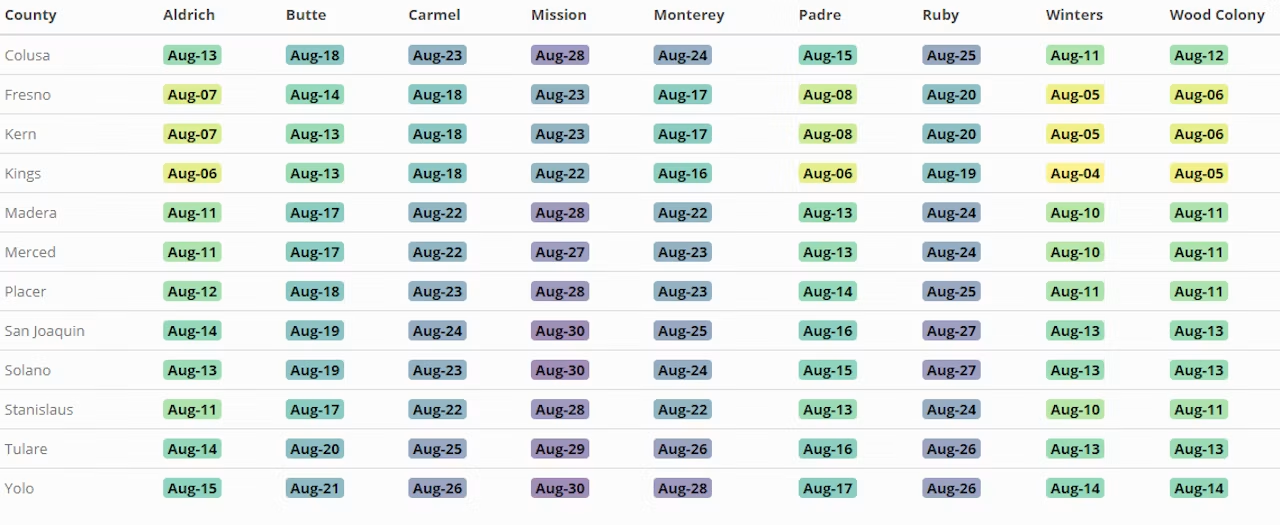
The best time to spray according to UC is at 1% hull split. Average predicted hull split dates for most pollinizer varieties are displayed in the table below:
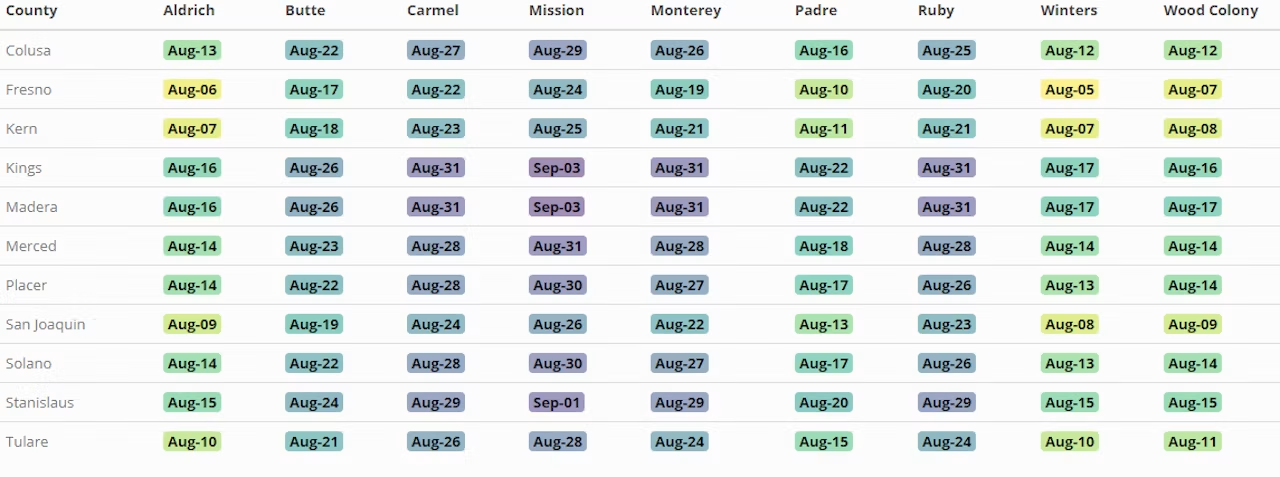
The 2019 1% regional hull split is also included for consideration in Table 2 below:
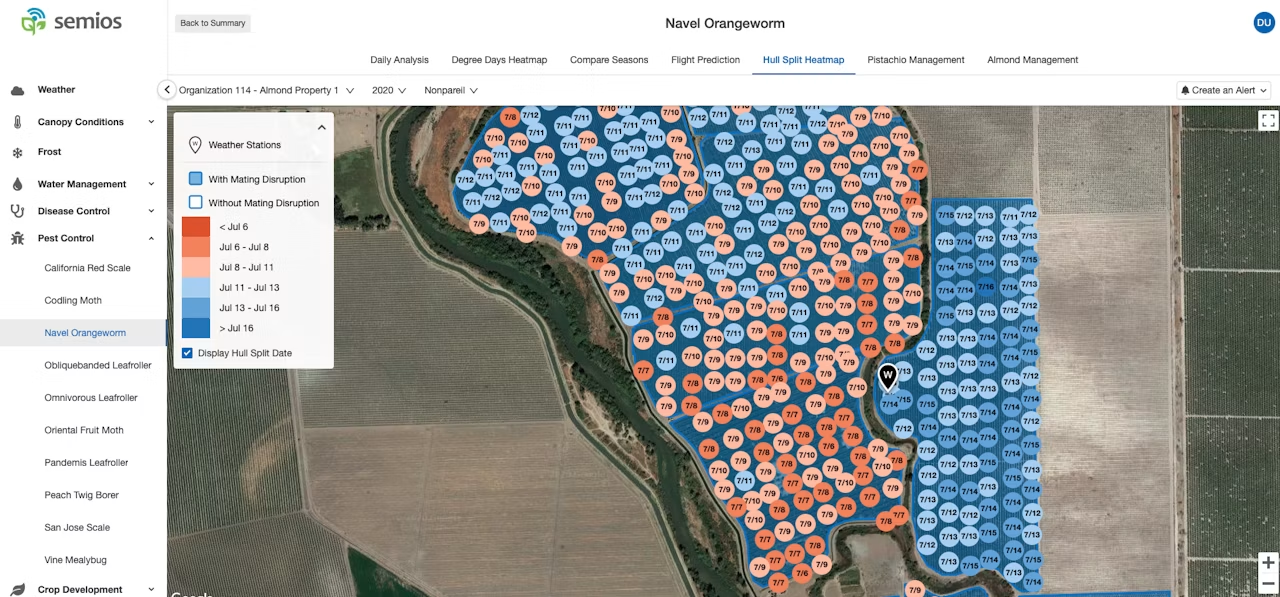
Semios customers can find forecasted hull split dates on a per-acre basis to help plan sprays more accurately.
Looking at the two tables above, it’s interesting to note how much later the 2020 hull split is for the later varieties than in 2019 for the Madera and Kings areas.
If pollenizer hull split is occurring close to an earlier variety’s harvest, a product with a shorter pre-harvest interval may be needed. Pre-harvest intervals and the effective periods for various products can be found on the UC website.
This post on the Almond Doctor also gives a good overview of expected coverage for different products.
Finally, always remember to rotate chemicals. The last thing you want to do is create a resistant population that may overwinter in mummy nuts in your orchard.
2. Tweaking hull split sprays based on navel orangeworm flights
Once you have an idea of hull split dates, sprays for NOW can be adjusted based on when navel orangeworm flight falls relative to pollenizer hull split.
The best way to determine when a NOW flight will occur is to check your egg trap data. Keep in mind that egg traps may not be as effective once hull split has begun, as traps will be competing with split nuts.
The Semios app shows the degree days at the time of capture so that growers and PCAs can easily add degree days to determine when the next navel orangeworm flight is expected.
After nonpareil hull split, the degree-day criteria for navel orangeworm, drops significantly from ~1100 degree days °F to ~750 degree days. This is due to the availability of fresh nutmeat and higher-quality nutrition.
If a flight is near the end of the residual period for the last spray and is a little before the pollenizer hull splits, you may want to consider adjusting your pollenizer sprays to be slightly earlier than 1% hull split to ensure you are hitting peak egg-laying.
3. Post-harvest irrigation
Post-harvest irrigation is very important in almond management. During this time, bud development for next year’s crop is happening, and failing to irrigate effectively can have a negative impact on next year’s yield.
Getting water on nonpareils while planning logistics for spraying pollenizers can be challenging. The Semios platform shows a hull split heatmap (see Image 1 below) to help see variation in hull split dates across blocks. Knowing which sections are splitting earlier than others can give growers and PCAs a good idea of where to start sprays first for maximum efficacy.